About raw goat's milk on the Sunshine Coast
The Sunshine Coast hinterland — around Black Mountain, the Noosa hinterland, Maleny and the broader Blackall Range — has a small but active community of goat keepers and boutique dairies. Some run herds for cheese, some for milk, and a handful sell unpasteurised (raw) goat's milk.
It's important to be upfront about the law here. In Australia, raw (unpasteurised) milk cannot be sold for human consumption. Because of this, suppliers almost always market raw goat's milk as cosmetic or "bath milk", or make it available through herd-share arrangements where members effectively own a share of the animals. This guide describes how vendors present and sell their products — it is not advice to drink raw milk. For the current rules and food-safety information, see FSANZ guidance.
What local suppliers typically offer
Goat dairies around the Sunshine Coast tend to be small operations, so what's available varies with the season and the size of the herd. Common offerings include:
- Raw goat's milk marketed as cosmetic/bath milk, usually sold in bottles for external use.
- Herd-share or agistment-style memberships, where you pay for a share in the herd and receive milk as an owner rather than a retail customer.
- Goat-milk soaps, balms and skincare made on-farm.
- Pasteurised goat's milk, yoghurt or cheese from dairies licensed to sell milk for consumption.
- Live animals, kids or breeding stock from some hobby breeders.
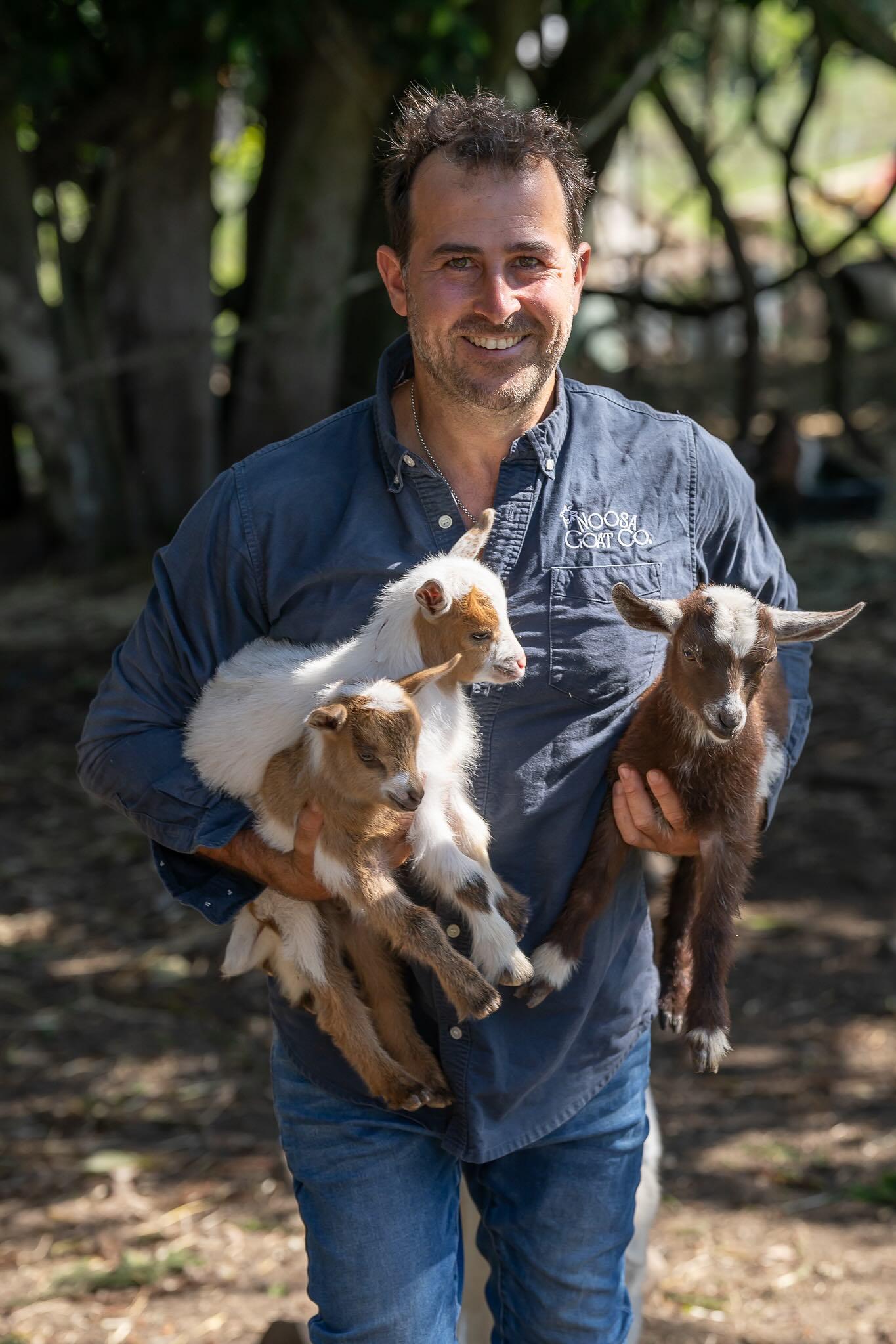
Noosa Goat Co, based at Black Mountain in the Noosa hinterland, is one producer featured on this page. As we don't yet have verified details or reviews for every supplier, we recommend contacting them directly to confirm current products and how they sell.
How they sell
Distribution is usually low-key and direct. Expect to find raw goat's milk through:
- Farm gate pickup — often by appointment, sometimes with set collection days.
- Local market stalls — Sunshine Coast and hinterland farmers markets are a common outlet for soaps, cheeses and cosmetic milk.
- Herd-share membership — an ongoing arrangement rather than a one-off purchase.
- Local delivery or pickup points — some run a small delivery run or partner with a food co-op.
Because herds are small, many suppliers work on a pre-order or waitlist basis. It pays to get in touch early rather than expecting to buy on the day.
Typical price ranges
Prices vary a lot depending on the supplier, the arrangement and the season, so treat the following as a rough guide only — always confirm current pricing directly.
- Cosmetic/bath milk: commonly around $8–$18 per litre or bottle.
- Herd-share buy-in: often a one-off membership or share fee plus an ongoing per-litre or weekly cost; structures differ widely between operators.
- Goat-milk soap: roughly $6–$12 a bar.
- Pasteurised goat's milk, yoghurt or cheese: typically dearer than cow-milk equivalents at the supermarket.
Goat's milk is generally more expensive than cow's milk because goats produce less and the herds are small.
How to choose a supplier
Since these are small, direct-sale operations, a bit of due diligence goes a long way.
- Transparency about practices. Good suppliers are happy to tell you how the goats are kept and fed, how milk is handled, and how fresh it is.
- Organic certification. If a supplier makes organic claims, look for certification from a recognised body such as ACO (Australian Certified Organic) or NASAA. "Chemical-free" or "spray-free" claims without certification simply mean you should ask more questions about what that involves.
- Cleanliness and setup. If you can visit the farm gate, you'll get a sense of how the operation is run.
- Clear labelling. Cosmetic/bath milk should be labelled for its intended use.
- Reviews and word of mouth. Newer listings (like some on this page) may not have reviews yet, so ask around local markets and community groups.
Questions worth asking
Before you commit, consider asking a supplier:
- How is the milk sold — as cosmetic/bath milk, via a herd share, or another arrangement?
- How and when is the milk collected, and how fresh is it at pickup?
- How are the goats kept and fed?
- Do you make any organic or spray-free claims, and are you certified? By whom?
- What are your pickup or delivery options and days?
- Is there a waitlist, minimum order or ongoing membership fee?
A note on the law and safety
We don't advise drinking raw milk, and we make no health claims about it. The sale of unpasteurised milk for human consumption isn't permitted in Australia, which is why you'll see it marketed for cosmetic use or offered through share arrangements. If you're weighing up your options, read the current FSANZ guidance so you understand the rules and the safety considerations before contacting a supplier.