
1. Eumarrah
4.6(89)· Hobart & Launceston
Certified Organic
Long-running Tasmanian natural/organic wholefoods grocer with fresh certified-organic and local produce, bulk foods; two stores plus Tasmania-wide online delivery.
Hobart & Launceston, TAS
Launceston and the surrounding Tamar Valley have a solid network of growers and shops selling fruit and vegetables grown without synthetic sprays. This guide covers how these suppliers typically sell, what you can expect to pay, and how to pick one that suits you — featuring listings like Eumarrah, The Organic Grocery Store, Sanwae Farm and the Harvest Launceston Community Farmers' Market.
Long-running Tasmanian natural/organic wholefoods grocer with fresh certified-organic and local produce, bulk foods; two stores plus Tasmania-wide online delivery.

Family-run (Mark and Shelley Bennic) one-stop organic grocery in Launceston. Official stockist of Sunseeker Snacks seed-oil-free beef-tallow and olive-oil potato chips per Sunseeker's store locator.
Sanwae Farm is a small farm in the Launceston area of Tasmania, growing fruit and vegetables and raising eggs alongside flowers using sustainable, uncertified organic methods. They share updates and produce availability through Facebook.
Tasmania's original natural/organic wholefoods store (since 1985). First Tasmanian stockist of Sunseeker Snacks' seed-oil-free potato chips (cooked in grass-fed beef tallow or organic EVOO) and also stocks 100% grass-fed organic pure beef tallow.
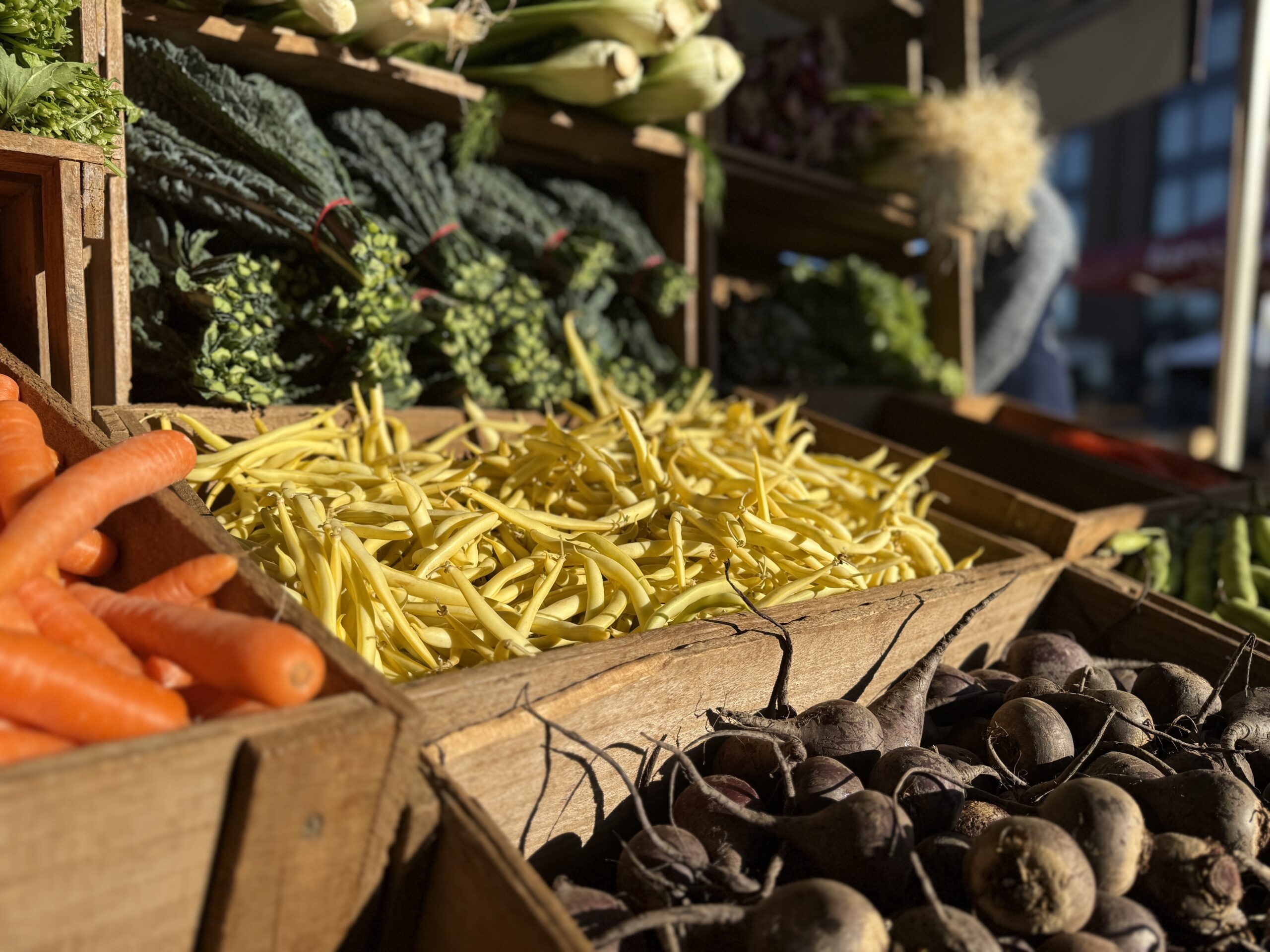
Saturday farmers market (8:30am–12:30pm) with 100+ local producers, including certified-organic and no-spray growers (Seven Springs, Three Peaks Organics, Bobbing For Apples, Brady's Lookout, Hillwood Fresh Food Co, Steve's Vegies).
"Spray-free" generally means produce grown without synthetic pesticides, herbicides or fungicides. It's worth knowing this is a broader, less formal term than "certified organic" — a grower can be spray-free without holding certification, and some certified operations describe themselves as spray-free too. Around Launceston you'll find a mix of both.
Typical offerings follow the Tasmanian seasons: leafy greens, brassicas, root vegetables, potatoes and pumpkins across the cooler months, then salad crops, tomatoes, berries, stone fruit and apples through spring and summer. Many small growers also sell eggs, herbs, garlic and seasonal extras like rhubarb or quinces. Range varies week to week, so don't expect supermarket-style consistency — that's part of buying local and seasonal.
There are a few common models around Launceston:
Prices vary widely by season, supply and how you buy, so treat these as a rough guide only — always confirm current pricing with the supplier.
Certified organic produce usually sits at the upper end of these ranges. Farm gate and market prices are often lower than retail, and buying what's in peak season is nearly always cheaper than out-of-season lines.
Check certification when organic is claimed. If a seller markets produce as "certified organic," look for a recognised certifier such as Australian Certified Organic (ACO) or NASAA, ideally with a certification number you can verify. "Spray-free," "chemical-free" and "natural" are not certified terms, so they rely on the grower's honesty rather than an audit.
Look for transparency about growing practices. Good growers are happy to explain how they manage pests and weeds, what (if anything) they apply, and where their produce is grown. Vague answers are a reason to keep asking.
Read reviews where available. Listings like Eumarrah (4.6★, 89 reviews) and The Organic Grocery Store (4.5★, 34 reviews) have a track record you can gauge. Newer or smaller listings such as Sanwae Farm may not have reviews yet — that's normal for farm-gate operations and not a mark against them.
Match the model to your needs. If you want the cheapest and freshest, go farm gate or market. If you want convenience and consistent stock, a store or a veg box may suit better.
Honest growers will welcome these questions. If someone can't or won't answer how their produce is grown, that's useful information in itself.
Because "spray-free" isn't a regulated term, the meaning can differ from one grower to the next. Some avoid all sprays entirely; others may use inputs permitted under organic standards. If exact growing practices matter to you, ask directly and, where an organic claim is made, confirm the certification. Buying from the people who grow your food — at the market or the farm gate — is the simplest way to get clear answers.
Or read the full spray-free fruit & veg guide, or browse all Launceston producers.
No. "Spray-free" generally means grown without synthetic sprays but it isn't a regulated or audited term. "Certified organic" is verified by a certifier such as ACO or NASAA against a defined standard. If certification matters to you, ask for the certifier and certification number.
Options include the Harvest Launceston Community Farmers' Market, stores like Eumarrah and The Organic Grocery Store in South Launceston, and farm-gate growers such as Sanwae Farm. Availability and hours vary, so check directly before you go.
As a rough guide, expect leafy greens around $3–$7, common vegetables about $4–$9 per kg, and seasonal fruit roughly $6–$15 per kg. Certified organic sits at the higher end. Prices change with the season and supply, so confirm current rates with the seller.
Ask whether the produce is spray-free or certified organic, who the certifier is if organic is claimed, where it was grown, how they manage pests and weeds, and what's currently in season. Good growers are happy to explain their practices.
Often yes. Farm gate and market prices are usually lower than retail because you're buying direct from the grower. Buying what's in peak season also tends to be cheaper. Stores offer more consistent stock and convenience, usually at a slightly higher price.