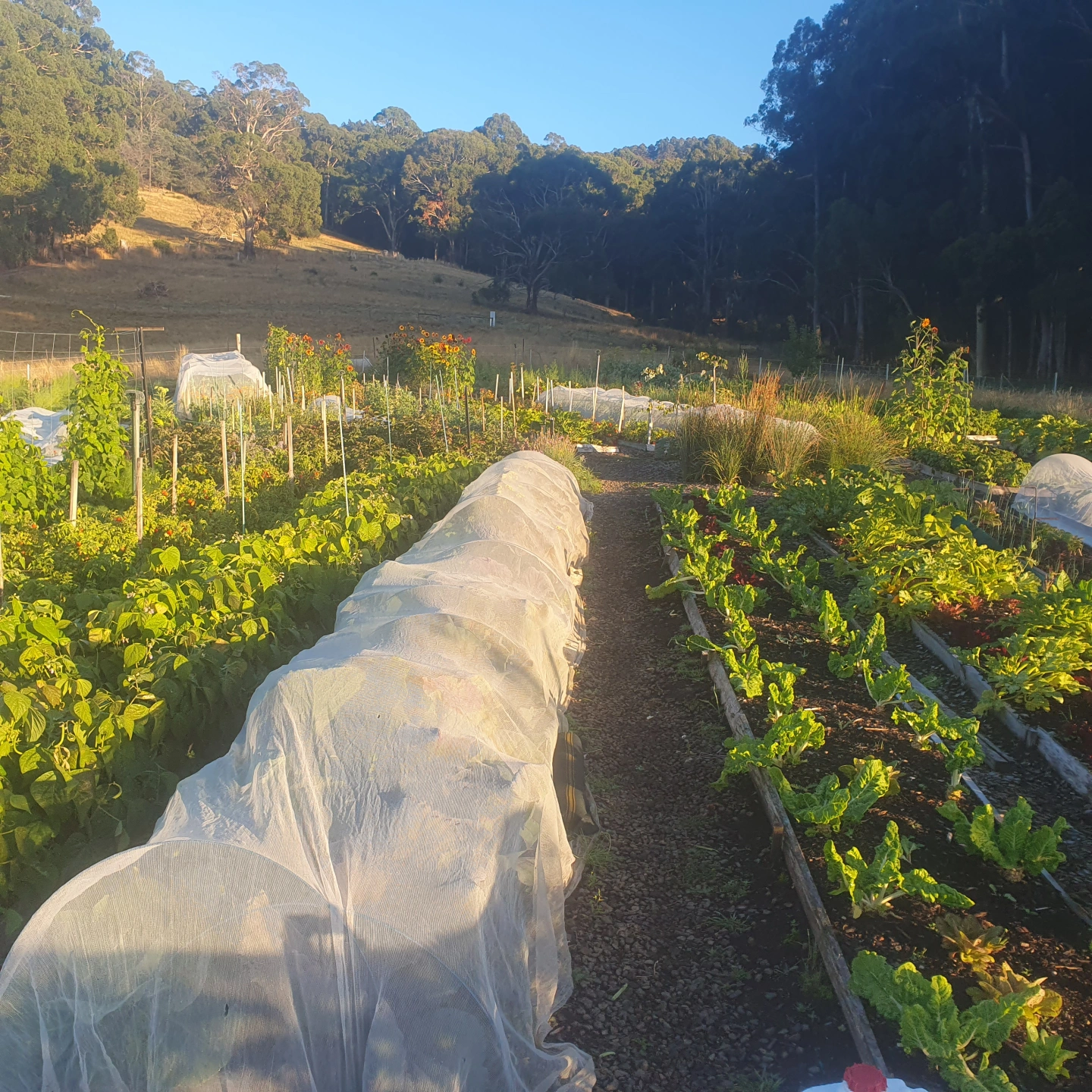
What veggie boxes and CSA suppliers around Hobart typically offer
A veggie box is usually a weekly or fortnightly selection of seasonal produce, packed by the grower and either delivered to your door or collected from a set point. Community-supported agriculture (CSA) takes this a step further: you subscribe for a season (often a term or several months) and share in whatever the farm produces. In practice that means abundant boxes in the warmer months and leaner, more root-and-brassica-heavy boxes through a Tasmanian winter.
Because CSA is a genuine partnership, you're effectively committing to the farm upfront, which helps growers plan plantings and cash flow. In return you get produce picked close to delivery and, often, a stronger sense of where your food comes from. Many farms around the Huon Valley, Channel, Coal River Valley and the Northern Midlands run these arrangements, and the page lists growers from Longley, Geeveston, Richmond, Dodges Ferry, Collinsvale and further afield around Exton and Westbury.
How they sell
Suppliers around Hobart tend to use one or more of these models:
- Farm gate: buy directly from the property, sometimes via an honesty stall or set pick-up times.
- Market stalls: many growers attend markets such as Farm Gate Market in the city or Hobart Twilight Market, where you can meet the grower and sometimes pre-order boxes for collection.
- Home or hub delivery: boxes dropped to your door or to a central collection point (a cafe, shop or someone's garage) that you pick up from on a set day.
- CSA share subscriptions: paid per season or upfront, with weekly or fortnightly boxes for the duration.
- Food co-ops and buying groups: some boxes are aggregated through co-ops that combine produce from several local growers.
Delivery radius matters. A Geeveston or Exton farm may only deliver within its own region, or may rely on a central Hobart pick-up point. Always check the collection days and locations before subscribing.
Typical price ranges
Prices vary widely with box size, season and whether produce is certified organic. As a rough guide only — always confirm current pricing directly with the supplier — expect:
- Small box (1–2 people): around $25–$40 per box.
- Medium/family box: around $40–$65 per box.
- Large box: $65–$90+.
- CSA season subscriptions: often paid upfront and typically working out to a similar per-box rate, sometimes with a small discount for the commitment.
Delivery may be included or added on ($5–$15 is common). Certified-organic boxes usually sit at the higher end. These figures move with the seasons and with fuel and input costs, so treat them as a starting point rather than a quote.
How to choose a supplier
Check organic claims. If a farm advertises as "certified organic", look for a recognised certifier such as Australian Certified Organic (ACO) or NASAA and a certification number. "Spray-free", "chemical-free" or "beyond organic" are not certified terms — they may well describe genuine practices, but they rely on the grower's own transparency rather than an audit. Neither approach is wrong; just know what you're getting.
Look for transparency about growing practices. Good suppliers are happy to explain how they grow, what inputs they use, and how they handle pests. Many run farm tours, open days or share updates through newsletters and social media.
Read reviews where they exist. Some listed farms — La Luna Farm, Longley Organic Farm and Resonate Farm — have public ratings, while newer or smaller listings such as Water Sprite Organic, Old Orchard Farm, Constance Farm, Lightwood Larder, Broom and Brine, Fat Carrot Farm, Springdale Farm, Misty Meadows Farm and The Great Green may not yet. A lack of reviews isn't a red flag on its own; ask around at markets or request a trial box.
Match the model to your life. A rigid weekly box suits some households; others prefer to pause, skip weeks, or swap items. Check the flexibility before you commit to a full season.
Questions worth asking
- What's in a typical box at this time of year, and how much does it change seasonally?
- Are you certified organic, and by whom? If not, how would you describe your growing practices?
- Where and when do I collect, or do you deliver to my area?
- Can I pause, skip or cancel, and what's the minimum commitment?
- Do you grow everything yourselves, or include produce from other farms?
- How is the produce packed — returnable crates, boxes, reusable bags?
- What happens in a poor season or crop failure (especially relevant for CSA shares)?
Asking these upfront saves surprises later and helps you find a grower whose rhythm matches yours. With the density of small farms across southern and northern Tasmania, most Hobart households can find a box that fits their budget, diet and collection routine.